
We caught up with Lianne to hear about her recent trip to London, and the interview with Fan Chih on behalf of the Taiwan Government.
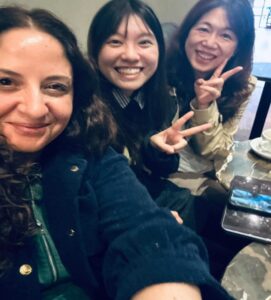 Lianne Aquilina left, Fan Chih middle, Dr Hsing Yi Teng right.
Yes, I was recently invited to South Kensington for lunch at a Vietnamese restaurant to meet Mrs Amy Tso from Herbprime and her colleagues from Taiwan: Dr Hsing Yi Teng, the Director of Chinese and Western medicine at NUWA Fertility Centre, and Fan Chih, a pharmacist and researcher who is undergoing further studies in Traditional Chinese Medicine (TCM).
I participated in a 40-minute interview covering various topics related to acupuncture practice for fertility, including discussions on herbal medicine.
What type of questions did Fan Chih ask you and Dr Hsing Yi Teng?
Some of the questions we received focused on common medical conditions, which seemed to be shared between the fertility populations in the UK and Taiwan in our patient samples. This particularly included ageing fertility, women undergoing IVF with ovarian reserve issues, unexplained subfertility, recurrent implantation failure, and stress and anxiety management.
Dr Hsing Yi Teng highlighted that yin xu (a TCM diagnosis) was a common presentation at the fertility centre. In contrast, although this is indeed a TCM diagnosis within my sample of patients, I often identify patterns such as blood xu, spleen qi xu, dampness, cold, and phlegm (among others, along with many concurrent conditions or patterning).
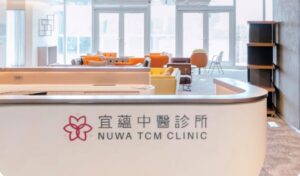
NUWA Traditional Chinese Medicine Clinic within the Fertility Medical Centre, Taipei City, Taiwan
Can you tell us about the integrated care services?
Regarding context, the way a professional TCM herbalist typically operates in the UK differs from how a TCM doctor functions in Taiwan (in my opinion). In Taiwan, practice is fully and comprehensively integrated. Databases store medical records with a substantial output of research. All under one roof, so to speak, there are ongoing cross-referrals, with, for example, hundreds of fertility-based herbal prescriptions per week for one herbalist.
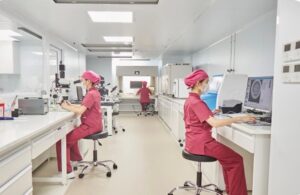
NUWA Lab, Fertility Medical Centre, Taipei, Taiwan
An interesting discussion took place about drug-herb interactions, where I explained that, for example, historically, a notice had been issued by an invitro fertilisation (IVF) clinic in the UK advising their patients not to take herbal medicine because a small sample of women had lower than expected fertilisation rates. The IVF clinic stated that, upon further investigation, the common factor was that these women had all taken herbal medicines. However, unfortunately, no further information has been shared on this.
It is important to note that the UK has approved supplier schemes to ensure the good quality of individual herbs and formulations, which could otherwise be adulterated or contaminated. It’s crucial to visit an herbalist who supplies the public with herbs sourced from an approved supplier scheme and that are quality-controlled. Herbal medicines should be prescribed through a consultation, by law. This is because Chinese herbs in the UK are unregulated and do not necessarily pass any quality control testing. Dr Booker, an expert in the field of ethnopharmacy, pharmacognosy and advisor to the UK’s Medicines and Healthcare Products Regulatory Agency (MHRA), often emphasises that it is vital to only use herbs supplied by reputable companies with a good track record for quality.
It was interesting to hear that, with a physician prescribing hundreds of herbal formulations per week for women undergoing fertility treatment, there were no adverse drug-herb interactions that were associated at all with poor fertilisation rate, and that herbal medicines are a vital part of patient fertility care and women’s success.
This conversation sparked a discussion about a potential research project, potentially involving data mining to investigate extensive data on herbs and drugs used together in women’s fertility healthcare. A significant and impressive dataset is available for assessing safe practices and developing clinical guidelines. I should also mention that a similar discussion took place a few years ago with Associate Professor Qin-Hua Zhang, Director of the Obstetrics and Gynaecology Department and the Reproductive Department at Shuguang Hospital, Shanghai University of Traditional Chinese Medicine and myself. She was not also only surprised by the statement like Dr Hsing Yi Teng was but also strongly disagreed with the prohibition of herbal medicine and the idea that adverse effects occur when prescribed professionally. Further knowledge on drug-herb interactions and sharing safe practices in the fertility sector is essential. Clearly, herbal medicine is used as a stand-alone treatment for fertility. Dr Booker and I spoke, and he ultimately pointed out that drug-herb reactions can be known but also unpredictable, which is why it is crucial to take a detailed case history and respond appropriately if a reaction occurs.
Charles Mak, a lecturer in Law, described in “Chinese Medicine in the UK at a Regulatory Crossroads” that the Register of Chinese Herbal Medicine (RCHM) represents one notable attempt to foster excellence and patient protection; however, he outlines that with voluntary regulation, membership remains optional, and its authority extends only to practitioners who choose to join. The Association of Traditional Chinese Medicine and Acupuncture (ATCM) UK is currently seeking the quality mark of an accredited register by the Professional Standards Authority for its registrants.
You mentioned discussing research on acupuncture and herbal medicine. What did you talk about?
I outlined UK evidence-based and leadership models, whereby, unless there are, for example, (though this has been disputed) around two randomised controlled trials of high-quality design, all treatments will remain controversial at the industry level and will not be given the green light to proceed/be implemented in day-to-day fertility services like they are in Taiwan or China. People can learn more about the context of IVF in the UK at the HFEA.
Acupuncture is popular among those facing fertility issues. When carried out by a specialist fertility acupuncturist, this treatment notably improves well-being and lowers stress levels. Although more research is necessary and some aspects of the study designs can be modified, existing research indicates a positive impact on birth and clinical pregnancy rates. Nevertheless, the evidence quality remains insufficient for a definitive conclusion in the UK. I reviewed the evidence on acupuncture in IVF many years ago, focusing on the critical appraisal of systematic reviews and meta-analyses. This information is available through our corporate member, the British Acupuncture Council’s Research database. At that time, I classified the intervention as mixed (amber) within that framework; however, it’s important to recognise that this “mixed” classification reflects variability in research design rather than the overall effectiveness of the intervention.
What type of research do you think is necessary?
I have designed a proposed pragmatic randomised controlled trial that incorporates recommendations from a design analysis of the current evidence base and industry quality standards, but I also think a network meta-analysis would be a valuable method to evaluate the overall evidence and the latest research, aligning with the health sector’s quality standards. This method is similar to how the National Institute for Health and Care Excellence (NICE) commissioned an examination of treatment management for endometriosis. Additionally, a new retrospective study on acupuncture has been published, showing some benefits of acupuncture – you can read more about this here. Do you recall the piece I wrote for the SaTA regarding the launch of NICE real-world data? “Informing NICE Guidance: Introducing NICE Real-World Evidence Framework,” and certainly, projects with this methodology are encouraged.
A topic of great interest during the interview was dosing, particularly in relation to acupuncture. The findings shared indicate that acupuncture dosage during ovarian stimulation seems to be beneficial, although it is not as widely recognised as one might think.
In real-world clinical practice, an acupuncturist must consider a range of strategies beyond the medical framework; these are vital to their qualification, scope, and remit. This involves aligning their TCM diagnosis and treatment planning with medical diagnoses and treatment stages. It can be quite complex for those not specially trained in traditional Chinese methodologies; strategies such as these are integral to clinical practice.
Thank you, Lianne. It sounds like an excellent meeting!
Overall, it was a wonderful interview and meeting. I was honoured to have the opportunity to discuss and share clinical activities, research, and political contexts (there is more to discuss on this), to exchange experiences, and to compare how a modality of complementary or integrated medicine functions in our different countries. Future projects and collaborations are essential, and this can definitely be achieved.
The Science and Traditions Association encourages collaboration within the research community and values diversity and inclusivity. It was uplifting to embody the SaTA ethos and explore a range of ideas for future research that would be insightful, impactful, and valuable in the fertility sector, both from a clinical and regulatory perspective.
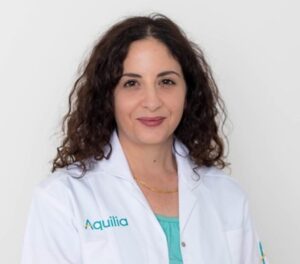
Lianne Aquilina RDN, Dip Ayurveda Therapy, BSc Hons Acupuncture, MSc Applied Health Research, PG Dip Herbal Medicine, MRCHM, MATCM, MBAcC, MBMAS
Lianne Aquilina is an ayurvedic therapist, acupuncturist, and herbalist. She is the founder of Aquilia Acupuncture and Jien Plant-Based Healing. Lianne is the co-author of the internationally best-selling textbook “Acupuncture for IVF: An integrated approach to treatment management.” Lianne has undertaken various leadership roles, including clinical and research supervision, guest lecturing, organisational board positions, and guideline advisory roles. She is a Trustee for the Science and Traditions Association UK.